
Egypt Traviio Tours
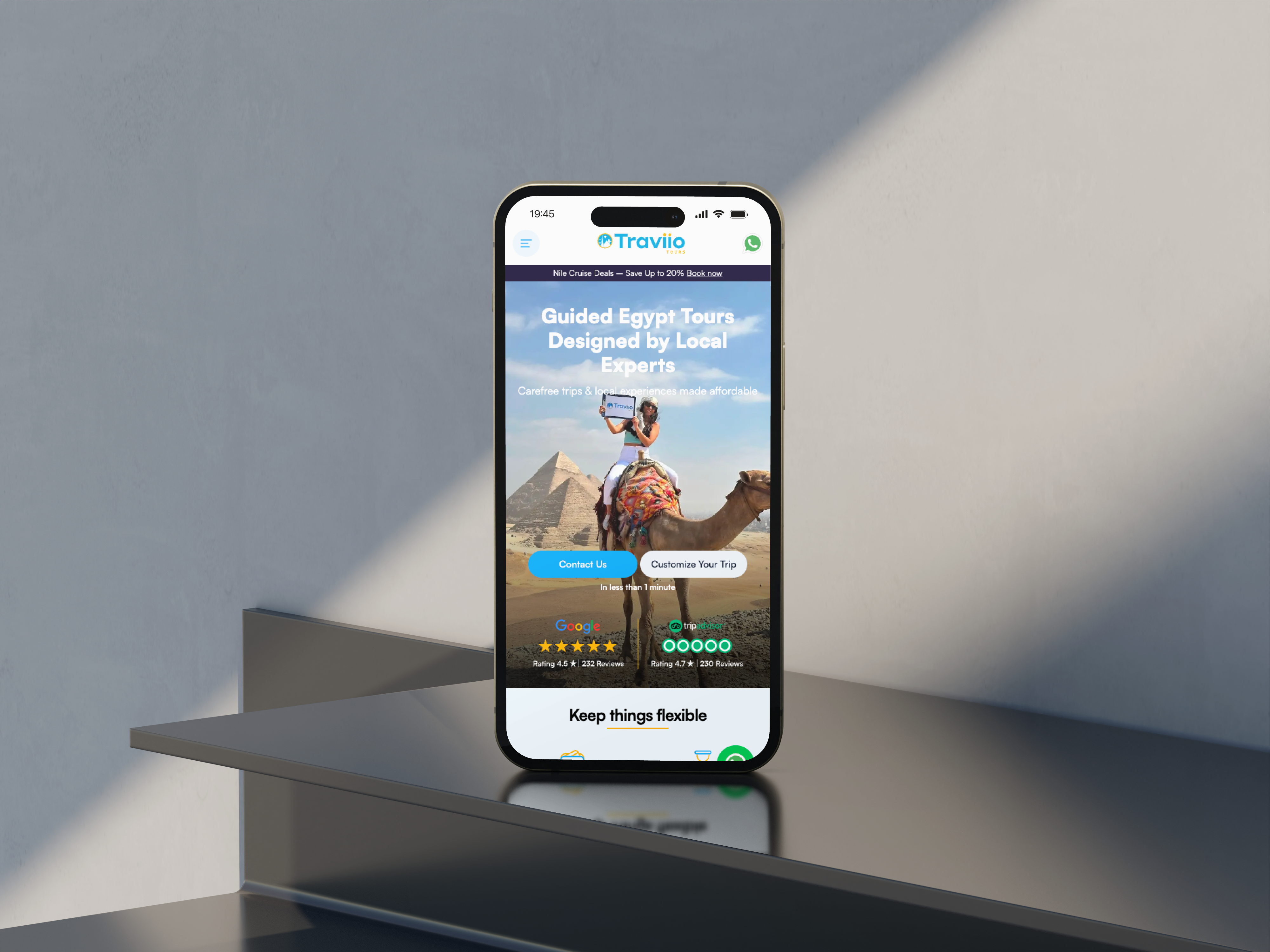
A full‑stack tour booking platform built from the ground up for a travel company entering the consumer market. Handles discovery, multilingual content, and payments — all managed through a headless CMS.
Live Website2025
TRAVEL & TOURISM
BOOKING PLATFORM
16 WEEKS
[01]
// WHAT WAS WRONG
THE PROBLEM
Discovery — Understanding the Real Problem
Promo Trend Travel had over 20 years of experience running travel arrangements in Egypt. They knew the industry, they had the relationships, the guides, and the operational infrastructure. What they didn't have was a direct customer-facing channel.
Their existing business operated through B2B arrangements — handling logistics and operations for other companies rather than selling directly to travelers. The goal was to launch a child brand, Traviio Tours, that would enter the consumer travel market and let the company sell Egyptian tour packages directly to international travelers for the first time.
This meant building from zero. There was no old website to replace, no existing customer base, and no content library. Everything — the brand's digital presence, the way tours were presented, the booking experience, the payment flow, and all the written content — had to be created and structured from the ground up.
The international ambition added a layer of complexity from the start. The target audience wasn't local — it was English, Spanish, and Portuguese-speaking travelers from across the world searching for Egypt tours. The site had to work in three languages and had to be discoverable through search engines in all three markets. A site that looked good but couldn't be found by the right people in the right language would have failed the client's core objective before a single booking came in.
[02]
// WHAT I BUILT
THE SOLUTION
Solution — What I Built and Why
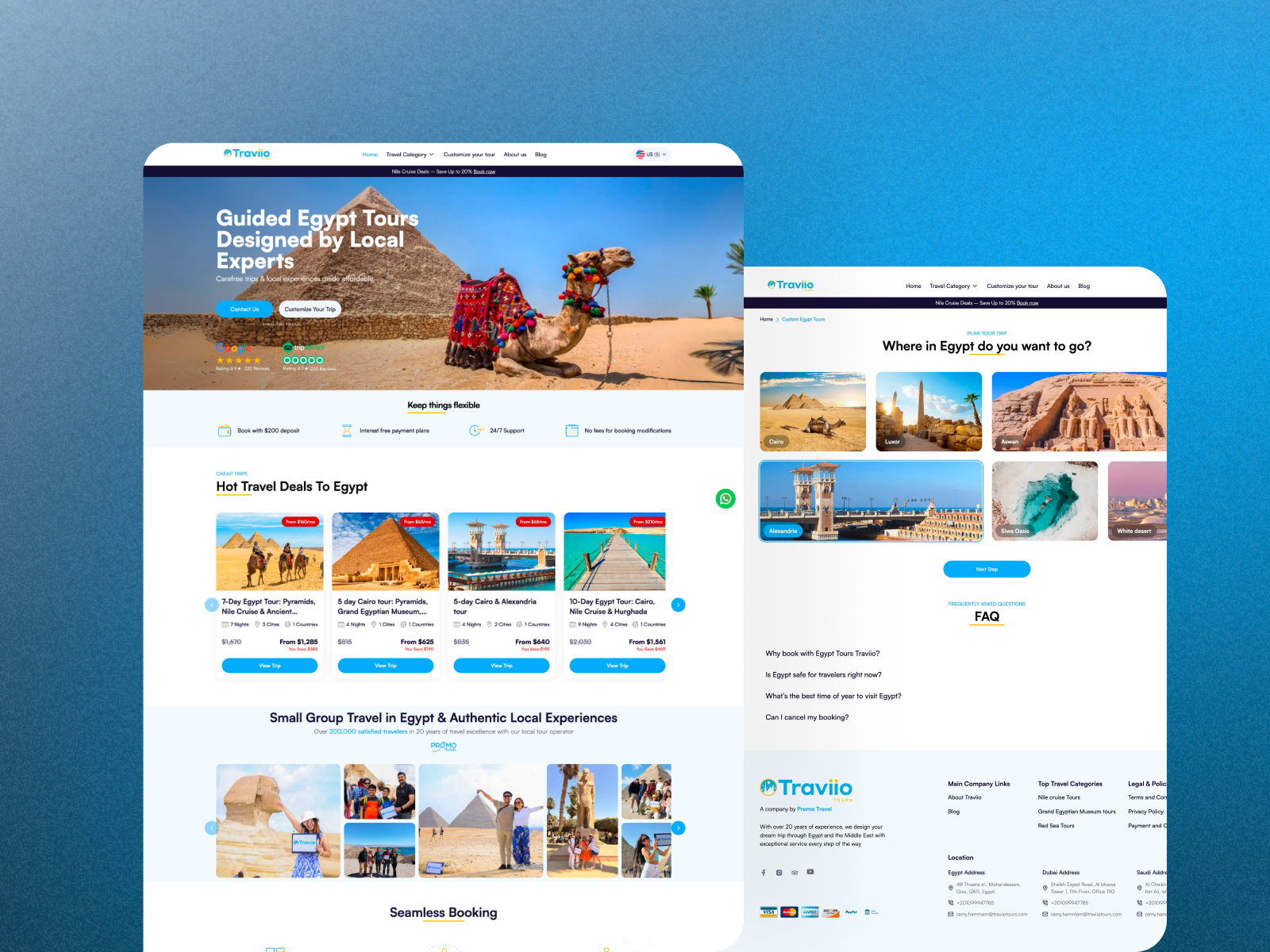
I built a full-stack tour booking platform that handles everything from discovery to payment, with three decisions that shaped the entire project:
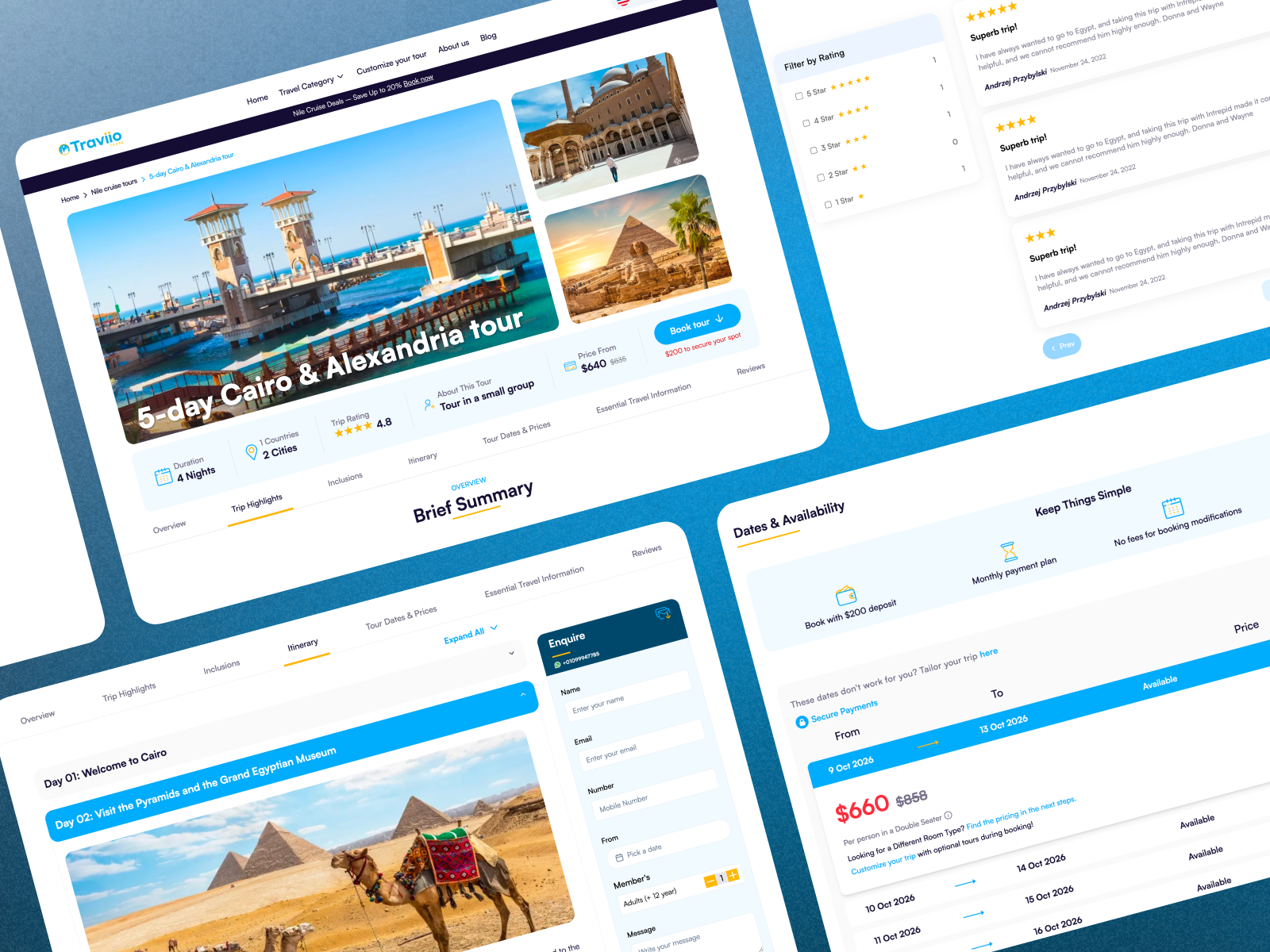
1. The entire platform needed to be content-driven and fully manageable by the client. A travel business lives and dies by its content — tour descriptions, pricing, availability, images, blog articles, destination pages. Hardcoding any of this would have made the site impossible to maintain as the business grew. I integrated Sanity as a headless CMS to manage every piece of content on the platform — tours, categories, pricing, dates, images, blog posts, and page copy. The client's team can add new tours, update prices, publish blog content, and manage the full site without ever needing a developer. This was not a bolt-on — the entire data architecture was designed around Sanity from the start.
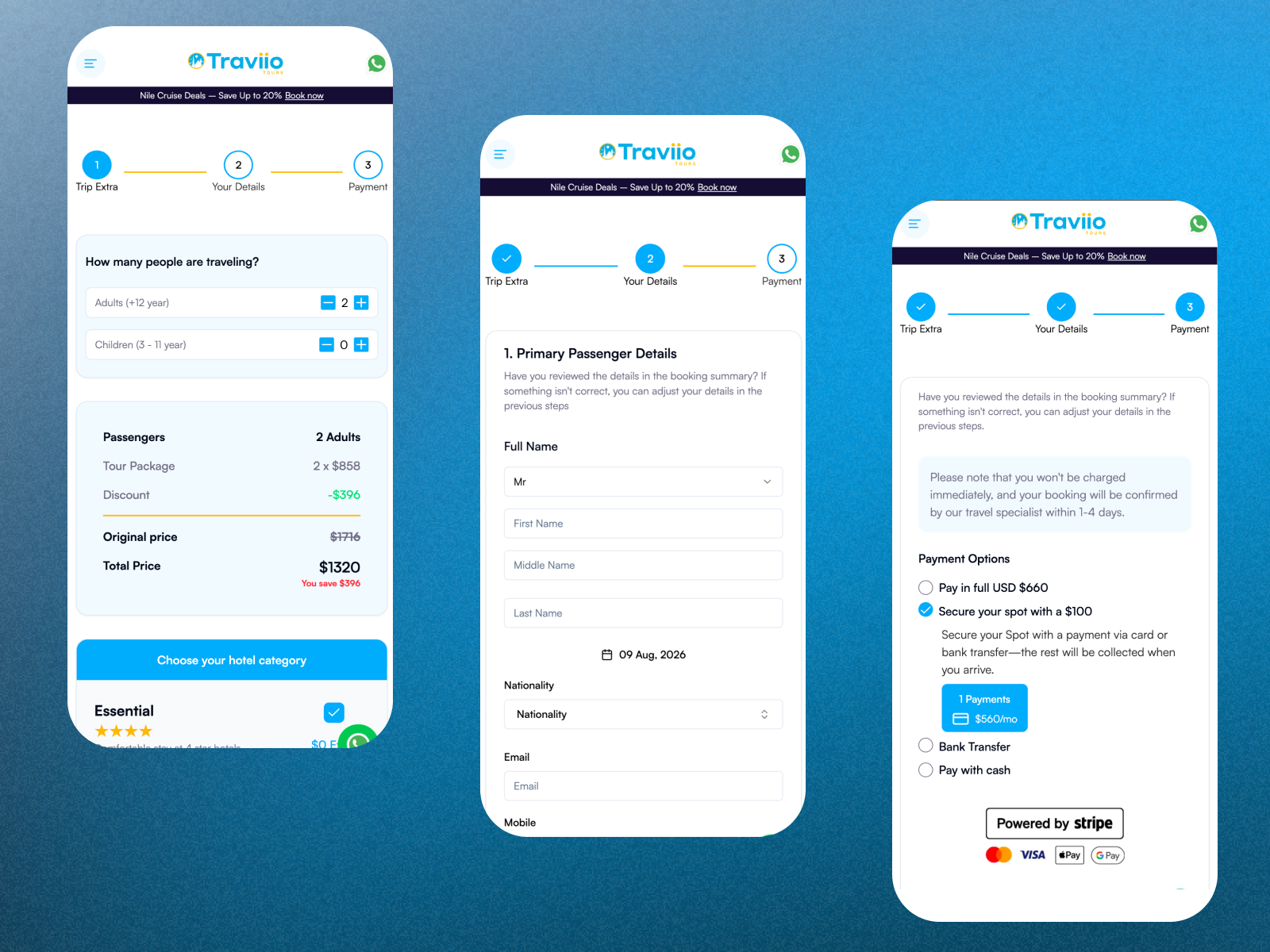
2. The booking experience needed to match the quality travelers expect when spending thousands on a trip. Each tour page leads into a multi-step checkout flow covering tour customization, traveler details, and payment. Travelers can specify their destinations, timeline, and preferences — making each booking feel tailored rather than off-the-shelf. Stripe handles payment processing with full compliance, giving international travelers the security and familiarity they expect when booking online. The booking flow was designed to reduce friction at every step, since drop-off during checkout directly costs the client revenue.
3. The site had to rank in search engines across three languages.International SEO for a multilingual site is one of the more technically demanding problems in web development. Getting it wrong means three versions of the same content competing against each other in search results, or the wrong language being served to the wrong market. I implemented proper hreflang tags, language-specific URL structures, and structured the content architecture in a way that allowed each language version to be indexed independently and correctly by Google. Every tour page, category page, and blog article was built with SEO as a first-class concern — metadata, structured data, canonical tags, and page speed all factored into how each page was built.
[03]
// HOW WE GOT THERE
THE PROCESS
Process — How We Got There
The project was built in layers, each one dependent on the one before:
- [01] — Designing and structuring the Sanity content models first — defining how tours, categories, destinations, pricing, and multilingual content would be stored and related to each other before writing a single line of frontend code
- [02] — Building the core pages — homepage, category pages, and tour listing pages — establishing the browsing and discovery experience
- [03] — Building the tour detail pages with the multi-step booking and checkout flow, including Stripe payment integration and order confirmation
- [04] — Implementing the three-language system — English, Spanish, and Portuguese — with proper routing, hreflang configuration, and content separation in Sanity so each language version was fully independent
- [05] — Building the blog section, fully managed through Sanity, structured for SEO with proper metadata on every article
- [06] — Tuning performance and SEO across all pages and all three language versions before launch — page speed, metadata completeness, structured data, and crawlability
[04]
// HOW THIS HELPED
THE IMPACT
Impact — How This Helped Their Business
A new revenue channel, built from scratch. Promo Trend Travel went from a B2B operation with no direct consumer presence to a live, bookable tour platform reaching international travelers in three languages. Traviio Tours now exists as a functioning business unit with its own digital identity, not just an idea.
Full content independence. Every tour, price, date, image, and blog article is managed entirely by the client's team through Sanity. The platform was designed to scale — adding new tours, new destinations, or new blog content is a content task, not a development task.
International discoverability. The multilingual SEO architecture means the site is properly indexed in English, Spanish, and Portuguese markets — giving the platform a chance to rank for tour searches across multiple geographies, not just one.
A booking experience that converts. The multi-step checkout with Stripe gives international travelers a secure, familiar payment experience. Travelers can customise their tour preferences, specify their timeline, and complete a payment entirely online — removing the friction of back-and-forth enquiries that characterises most small tour operators.
[05]
// A NOTE ON MULTILINGUAL SEO
EXTRA
The Multilingual SEO Challenge
This deserves its own mention because it was the most technically demanding part of the project and the one most likely to be invisible to anyone looking at the finished site.
Building a site in three languages is straightforward. Building one that is correctly indexed, correctly served, and correctly ranked across three languages in Google is a different problem entirely. The wrong implementation — duplicate content without proper signals, missing hreflang tags, or language detection based on IP rather than URL — can actively harm search visibility rather than help it. Every decision in the URL structure, the Sanity content architecture, and the page-level metadata was made with this in mind. The goal was a site that Google understood as three distinct, authoritative versions of the same content — not one site with translated text that search engines couldn't make sense of.